
Why Layout Matters More Than Finishes
Most renovations begin with materials — and for good reason.
Materials are the easiest part to imagine. You can hold a tile sample. You can see a cabinet door. The finish feels like the result, even when the result is still months away. So people start there, with excitement and color swatches and showroom visits, while the plan — the quieter, more consequential part of the process — waits.
But the plan is where a renovation is decided. Get it right, and every finish you choose lands the way you hoped. Miss it, and even the most beautiful materials can't compensate for a room that doesn't quite work.
What happened in Lafayette
Early in my practice, I joined a kitchen renovation in Lafayette where the sequence had already begun before I arrived. Cabinets had been ordered to fit the existing layout. A large-format quartz countertop had been selected — beautiful in the showroom, but scaled for a space larger than this one. Floor tiles had been chosen without knowing how many cuts the new configuration would require.
When I studied the plan, the problems became clear quickly. The clearance between the cabinet run and the opposite wall was too narrow to meet code. The refrigerator the family had already purchased couldn't open fully in the space allocated for it. The island they wanted, and the window they wanted enlarged beside it, required a completely different configuration than what the cabinets had been built for.
We removed a wall. We redesigned the layout. Cabinets were returned where possible — restocking fees applied. The countertop had to change because the new proportions made the original selection look mismatched against the space. The floor tiles required more material and more labor than originally estimated once the cuts were remapped across the reconfigured room.
By the time the project was complete, the family had spent nearly one and a half times their original budget. Not because the finishes were expensive. Because the sequence was wrong.
The finished kitchen was beautiful. It functioned exactly as it should — open, well-proportioned, light coming in through the enlarged window, the island where it needed to be. It just cost considerably more to arrive there than it should have.
Why finishes follow layout — not the other way around
There is another reason designers work through the plan before selecting materials — one that goes beyond avoiding costly changes.
Layout and finishes are in conversation with each other. The scale of a tile, the veining of a stone, the tone of a cabinet — these read differently depending on the proportions of the space, the quality of the light, and the relationship between surfaces. A large-format marble that looks luminous in a generously proportioned kitchen can feel heavy in a tighter one. The same countertop reads differently under a north-facing window than under one facing a garden in the afternoon.
When the layout is resolved first, materials are selected in response to it — to the actual light, the real proportions, the fixed relationships between rooms. That is when finishes enhance rather than compensate.
What a considered sequence looks like
Before any material is specified, circulation is refined and proportions are evaluated. Storage is integrated where it's actually needed. Natural light is studied across the day — morning light in the kitchen, evening light in the main living areas. Appliances are specified once clearances are confirmed. The relationship between spaces is resolved before anything is ordered.
Only once the structure feels grounded do materials and details follow.
This is not a longer process. It is a more considered one — and it almost always costs less in the end.
Questions worth asking before your renovation begins
If you're planning a renovation, these are the questions that matter most before you visit a showroom:
Does the existing layout actually work for how we live, or are we renovating around a plan that was always wrong for us?
What is the clearance at every critical point — refrigerator opening, dishwasher door, passage between island and counter?
Where does natural light enter, and at what time of day?
Where do family members naturally gather, and does the current layout support or fight that? What is the storage plan — not in general, but specifically, for every category of thing that currently has no home?
These questions don't require a designer to answer. But they do need to be asked before materials are ordered.
When it comes together
When the layout is thoughtfully resolved before anything is selected, the result is not dramatic. It simply feels right.
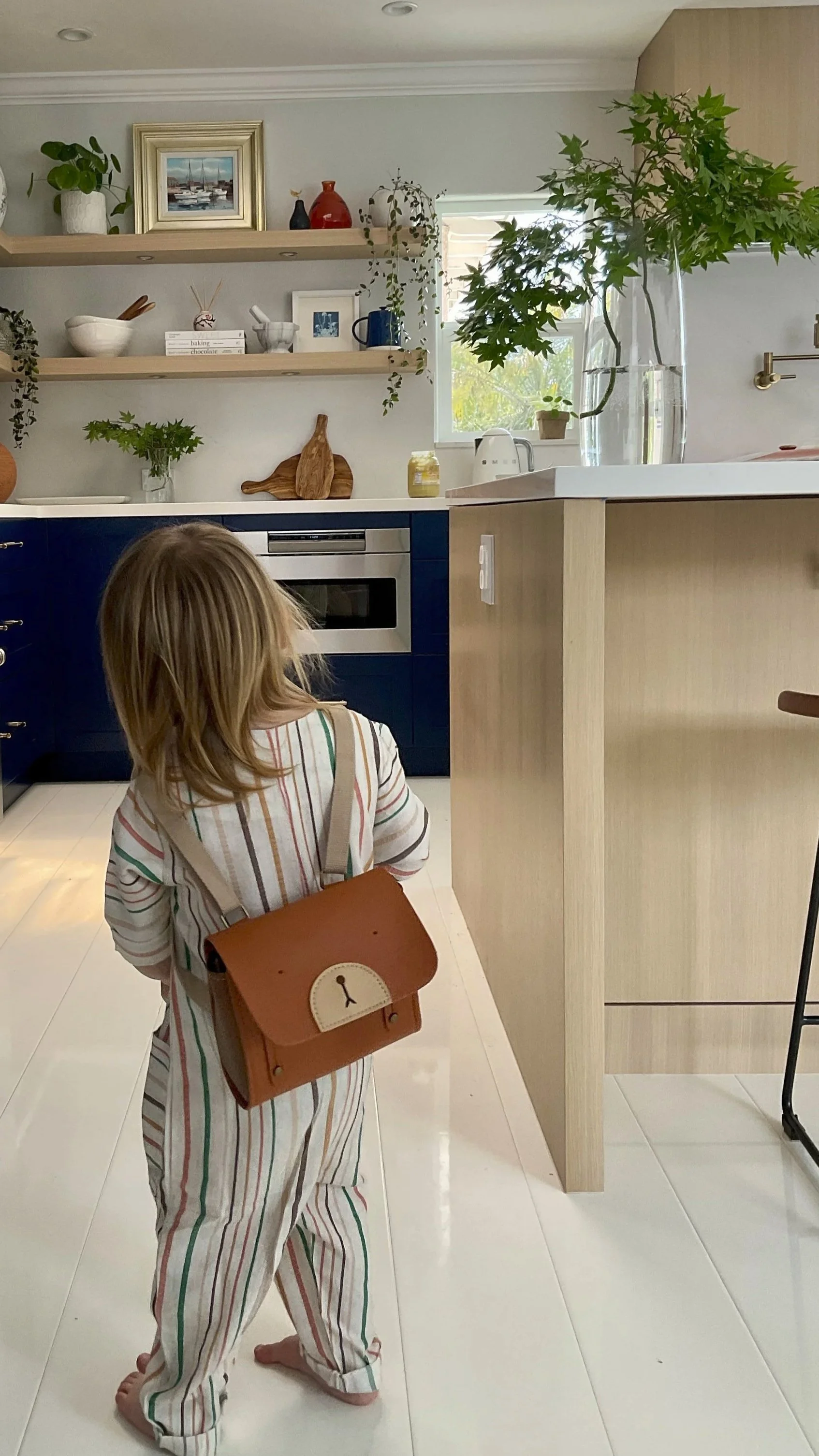
The kitchen works for two people cooking at the same time. Children settle at the island while dinner is being made. Guests move through the space without crowding anyone. The living room is as comfortable at the end of a long day as it looks at first glance.
The home supports daily life quietly, and consistently. Not because everything is perfect, but because everything is in the right place.
That is the difference between a renovation that looks complete and one that truly feels complete.
On how this thinking begins before a single drawing is made — [What I Look for Before I Draw Anything →]See this approach in a completed project — [French Country Estate, Ruby Hill →]