
What a Renovation Actually Costs — and How to Think About It Before Anything Begins
Ask ten people what a kitchen renovation costs in the Bay Area and you will get ten different answers. Search online and you will find ranges so wide they are almost useless — the same list placing a modest refresh alongside a complete architectural transformation as if they were versions of the same thing.
The range isn't wrong. It simply reflects something most renovation guides don't say directly: the investment a renovation requires cannot be separated from what the renovation actually is. And what it actually is cannot be known until someone understands what the space needs to become — and for whom.
Scope and budget are inseparable
Every renovation begins with two questions that appear separate but aren't. What does this space need to become? And what are you prepared to invest in getting there?
The answer to the first shapes the second. The answer to the second shapes the first. Bringing those two questions into alignment — before any contractor is called, before any material is selected — is where the process starts.
You cannot know what a renovation requires until you understand what it needs to become. And you cannot know what it needs to become until someone has sat with the space and understood how the people living in it actually move through their days.
A number formed before that understanding is a starting point, not a budget. The design conversation — between homeowner and designer, early and unhurried — is what turns that starting point into something real and workable.
What every homeowner needs to share early is their investment range. Not a precise figure, but an honest sense of what they are prepared to put into the space. That range shapes every decision that follows — which materials are considered, which layout options are viable, where to invest deeply and where to be thoughtful about flexibility. A designer who understands the range from the beginning can work within it purposefully rather than designing toward something that needs to be walked back later.
A framework for the Bay Area
A useful starting point: kitchen renovations in the Bay Area typically represent between 5% and 15% of a home's value, depending on scope, materials, and existing conditions. The range is wide because the projects within it are genuinely different. A cosmetic refresh and a full architectural renovation are not the same investment — and treating them as comparable is where most early budget conversations go wrong.
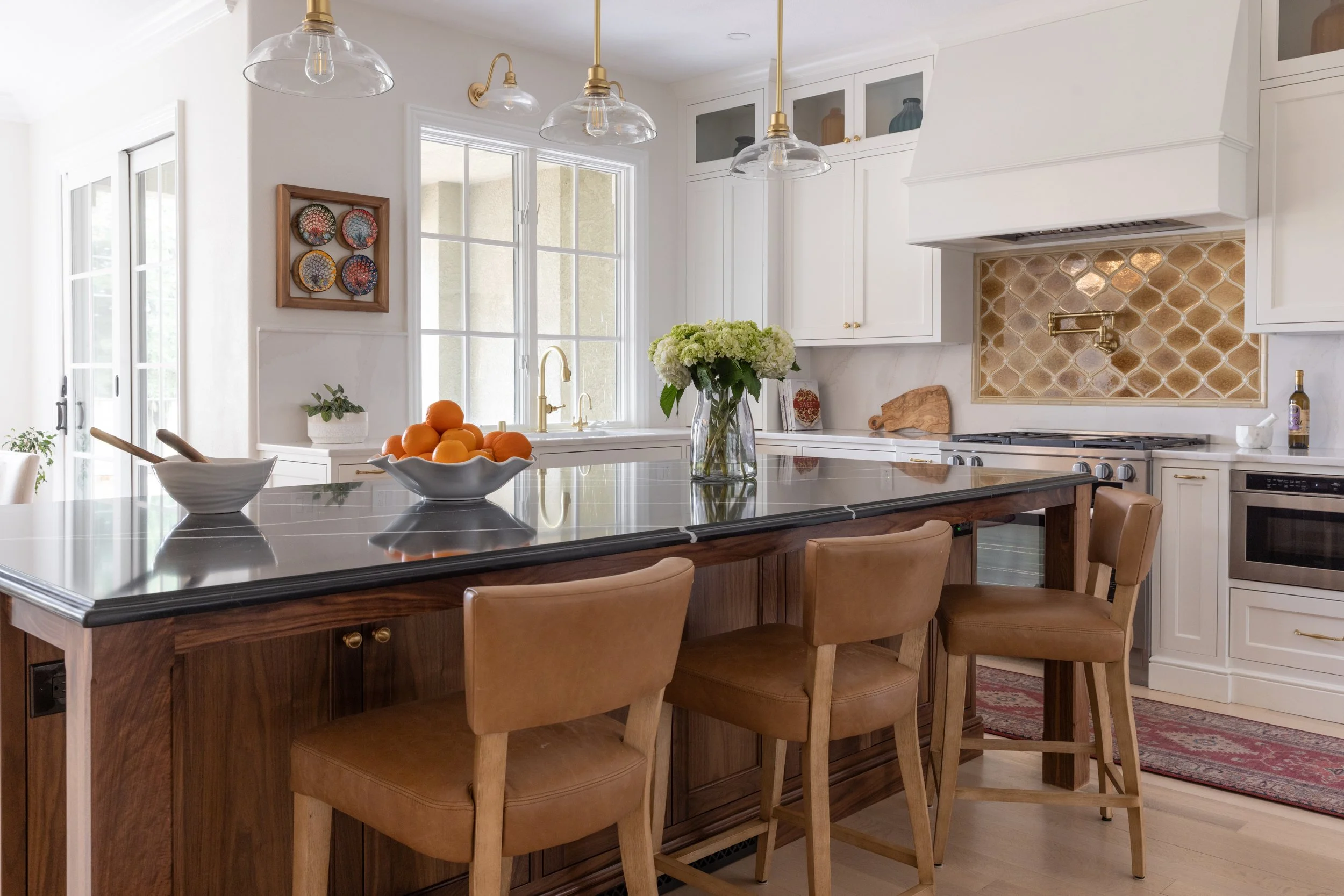
What moves a project toward the higher end of that range is almost always the same constellation of decisions: custom cabinetry built to the proportions of the space, natural stone selected and installed by skilled hands, appliances specified to work with the layout rather than fit around it. Each is a considered choice. Together they produce a kitchen that works and ages well — and that requires an investment that reflects what it actually takes to make them well.
Custom cabinetry is worth understanding specifically. Designed and built for a particular space — its proportions, its light, its architectural character — it is a different category from pre-made cabinetry selected from a catalog. The investment it requires reflects that specificity and varies with the materials chosen, the complexity of the design, and the craftsmanship involved. It also sets a standard that the selections around it need to meet. Custom cabinetry alongside appliances or countertops chosen at a different level of quality creates a visible tension — the space never quite coheres. Understanding that early shapes the scope honestly rather than discovering it mid-project.
What scope actually reveals
When I began working on a full renovation of a French Country estate in the East Bay — a home with soaring ceilings, generous proportions, and genuine architectural character — the vision was clear from the first conversation. Custom mill-work throughout. Cabinetry built to the scale of the rooms. A primary bathroom finished in marble mosaic.
It was a beautiful vision and entirely achievable. What the initial investment range didn't yet account for was what that vision actually required to be made well.
The marble mosaic bathroom is the clearest illustration. The material itself is one consideration. The skilled labor to set it is another entirely. A mason who works with marble mosaic brings hours of careful, experienced work to each section — aligning, cutting, setting with the precision that this material demands. It is a different craft from standard tile installation, and the investment reflects that expertise rather than the square footage covered. Understanding what handcrafted work genuinely requires — before the scope is set — is part of what allows the investment range to be formed around real decisions rather than assumptions that don't hold.
When scope is established first, none of this arrives as a surprise. These become surprises only when an investment range is set before the project is truly understood.
What older homes often hold
In the Bay Area, many of the homes most worth renovating are also the ones with the most history. That history sometimes includes electrical systems that predate modern kitchens, plumbing that needs replacing before new fixtures can be installed, or structural conditions that only become visible once walls are opened.
These are not failures of planning. They are the realities of working with homes that have lives behind them. What thorough pre-design does is surface as many of these conditions as possible before construction begins — studying what exists carefully, asking the right questions early, building a scope that accounts for what the house is likely to hold. The conditions that remain genuinely hidden become manageable rather than destabilizing, because the project around them was built with considered flexibility.
Where to invest and where to be flexible
Not every surface in a renovation deserves the same depth of investment. Some decisions are foundational — layout, structure, the spatial relationships that determine how a home functions for the next twenty years. Others can be revisited over time without compromising the outcome.
Layout deserves the most care and the earliest attention. A well-considered spatial plan — one that understands how people actually move through the space, where light falls at different times of day, how rooms relate to each other — is the foundation everything else rests on. Materials applied to a poorly considered layout will always feel like they are compensating for something.
Certain materials reward investment because of how they age. Stone, solid wood, quality hardware — these develop character over time rather than showing wear. Other selections can be approached with more flexibility without diminishing the result.
An experienced designer brings a comparison base to these conversations — drawn from completed projects, an understanding of what different selections actually require, where the investment is felt most in daily life, and where thoughtful flexibility produces an outcome just as considered.
What a designer does with a budget
Before any drawing begins, the work is in understanding. How the space is currently used. What it needs to become. What the existing conditions suggest about what lies beneath the surface.
From that understanding comes a detailed scope — and from the scope, a realistic investment range drawn from the actual decisions the project requires. Not a starting assumption. Not a figure that holds only if every selection lands at the most modest option available. A range built on what the project genuinely is.
Throughout the project a detailed spreadsheet tracks every material, fixture, and selection — updated as decisions are made and conditions evolve. This is how a renovation stays coherent between what was designed and what is being built, and how the investment range remains a living document rather than a figure set once and quietly exceeded.
What the investment returns
A renovation that begins with a clear understanding of what the space needs to become — and what that genuinely requires — produces exactly what it should. A home that works for the life inside it.
Quietly, consistently, for the people living in it. When a home works well, the ease it creates opens space for what matters most — productivity, relationships, the small daily rhythms that accumulate into a life more settled, more focused, more fully lived.
That is what a thoughtful renovation gives back. And it begins with understanding the investment clearly — not just what it requires, but what it makes possible.
On how the design process begins before any scope is set — What I Look for Before I Draw Anything →On why spatial decisions shape a renovation more than any material — Why Layout Matters More Than Finishes →